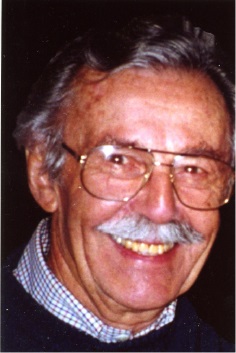
Ken Fox AM
Rank: Flight Lieutenant
Conflict: Europe
Serial No: 402330
Born in Sydney on 12th September 1919 to Roy and Ethel Fox. He had an elder sister, Joyce, born two years previously. Ken grew up in the pioneering era of aviation of Kingsford Smith crossing the Pacific, Lindberg crossing the Atlantic and the London Sydney Air Race of the 1930’s. His first flight was a joy ride at 10 years of age. This sowed the seeds that led to his lifelong career and passion. Ken left Summer Hill Intermediate High School, at age 15 and applied to the R.A.A.F. . He was rejected due to his age. He joined David Jones in Sydney in the overcoat and suit Department. He has always been an elegant dresser; precise and correct. This was his grounding. Clothing had to fit and be ‘cut’ correctly! Throughout his working life he had the reputation that he always looked as if he was just coming to work at the conclusion of his day. At age 17 he re applied to the R.A.A.F. and was again rejected due to his age and lack of education. At 17 he also met a “good looking blonde”, Joan Maas who was destined to be his lifelong partner. This 60 year partnership led to 2 children, 8 grandchildren and on current count 19 great grandchildren. As a young couple their weekends were spent at their favourite place Bondi Beach worshipping the sun. Sun, surf and swimming remained their favourite pastime always. At the outbreak of WW2 his opportunity came. Ken reapplied to the R.A.A.F. and was accepted to train as a Navigator. He was called up in August 1940 in the first draft. Within an hour he had himself reclassified as a ‘Trainee Pilot’, such was his persistence. He remained a pilot for the next 40 years. He was 20 years of age. After completion of his initial training at Bradfield Park near Sydney- square bashing he called it- he was selected for the pilot training and sent to Tamworth flying out of the Tamworth racecourse where he learnt to fly. It was in Tamworth that he gained his wings. They stayed in temporary mizzen huts next door at the show ground. His first solo was in a Tiger Moth on 26/10/40 after 10hrs 10 mins flying training, the third on the course to solo. He graduated from his course assessed as ‘Below Average’ but was selected for fighter pilot training. For the next three months he trained at Amberley on Wirraways and was assessed as ‘average’. He graduated as a SGT ready for posting. Air crews were being posted to parts of the Commonwealth, but they all wanted to go to the UK and fly Spitfires. The Battle of Britain was headlines in the papers- that’s where the action and excitement was- they were the real Errol Flynn’s. He was lucky and was selected in the Blue Draft to embark to England as replacement crew to the R.A.F. . Of the 112 R.A.A.F. personnel who embarked on the Freighter ‘Sarpedon’ in April 1941 he was the only pilot to still be alive in 1945. They arrived in Belfast 13 weeks later, in the largest convoy to cross the Atlantic at the time, during an air raid. The Germans knew they were coming. He was off loaded immediately in the dark onto a ferry and taken across the Irish Sea to Scotland. He was one of the few Australians posted to a fighter O.T.U in Northern Wales for conversion to Spitfires. At the conclusion of the 6 weeks course he was one of the 3 or 4 assessed as ‘Above Average’ as a fighter pilot under training and asked to stay an extra 3 weeks to help instruct the next batch of pilots coming through- ‘Nothing too tricky’, but it helped the experienced instructors who were ex-Battle of Britain pilots. The advantage was he would be sent immediately to 11 Group which was fully combat operational and responsible for the defence of London from the south. The posting to 11 group was a big plus as it saved up to 6 months flying with non-operational squadrons being formed in Scotland and Northern England. He believed that 3 weeks probably saved his life. On 20/11/1941 he was posted to R.A.F. 124 ‘Baroda’ Squadron at Biggin Hill, Britain’s top fighter base and promoted to Flight Sgt. His Squadron Commander was Duke Woolley who eventually became Air Commodore. He was the only Aussie most of the time. He said ‘there was another but he was shot down’. At Biggin Hill Winston Churchill used to drive through the airfield to get to his home and often stopped to chat to the pilots in the mess. Biggin Hill was the No. 1 Fighter Station in Britain. 453 pilots were killed operating from there. He flew over 100 operational sorties during his 12 month tour of operations there, being shot up 3 times but managing on each occasion to get his damaged Spitfire back to England. Ken’s experiences were often reported in the Sydney press with headlines such as ‘Shot Himself Clear’. He was quite the local hero. He always knew that on sorties over France to stir up German Fighter Bases someone wouldn’t return. ‘Ops to Lille were the worst’. It was the limit of the Spitfire’s range and there were always dogfights on these ops. He said it was a strange existence. You would come back from a sortie at 4:00pm for tea and scones, then out again for a raid before dark. He flew as close escort to the first American Bomber raid. ‘We learnt never to get too close or you would get shot at’. The bombers were to raid Ostend. They got hopelessly lost, dropped their bombs and returned to base. When they landed the American General decorated the crew of every plane with a D.F.C. . At the end of his Tour he was posted back to Australia. His R.A.F. Log book shows his assessment as ‘above average’ as a fighter Pilot. He arrived in Sydney in March 1943, 2 years after his departure. He was to have a couple of weeks disembarkation leave so he and Joan decided to marry on the first weekend back. On the Saturday, he was drinking in the bar at the hotel Australia in Sydney with his mates when a call came through to return to base at Bankstown. The Japanese were throwing a few shells onto the Sydney beach suburbs from submarines off the coast. Sydney had had the Midget submarines causing havoc right in Sydney Harbour. A Japanese reconnaissance aircraft was shot down over Darwin and the press were asking questions about Sydney’s defence. There was one old fighter based at Bankstown and that was it. Questions were raised in Parliament and the Government decided a morale booster was needed. There were Spitfires newly arrived in Australia, along with 452 and 457 Squadrons from the UK. They had been snuck into Darwin. Hence the shot down Reconnaissance plane. Spitfire training was going on at Mildura. So it was decided to forgo the secrecy and fly a Flight of Spitfires from Mildura to Sydney. The problem was that there were no pilots able to stay in Sydney as all available air crew were either training or operational. It was realised there were 3 or 4 experienced pilots just arrived from the UK and in Sydney, among which Ken was one and he was recalled on his wedding eve. They were told to beat up Sydney on the Sunday. They were given absolutely free reign. It had never happened before or probably since. Well, did they ever!! There was a huge surf carnival at Bondi. Thousands of people were there. So the 3 Spitfires headed low over the city straight for Bondi, his favourite haunt. They beat up the beach doing barrel roles, then back inland to come again on the deck over the beach and out to sea into a vertical climb and roll out towards Manly and up the coast to Palm Beach. They beat the daylights out of Palm Beach before heading for their Bankstown base. On the way back they split up and he decided to fly over his parent’s home at Strathfield. There is a huge park opposite the house with cricket pitches and spacious parkland. He lined up the house and inverted. He said he could see the chimney coming up and he prayed he would miss it. He was losing speed and thought he was gone. Next thing he saw Enfield shopping Plaza whipping past his vision. Somehow he survived the situation and returned to Bankstown. The press and population were stirred. Sydney was defended by Spitfires! The next weekend he married. It was 8th March 1943. The honeymoon lasted one night. Shortly after he was posted to 452 Squadron in Darwin as replacement air crew. On 2nd May – Raid 54 over Darwin. There were twenty-five Japanese bombers escorted by 27 fighters bombing Darwin. On this raid Ken flew as Wing Commander Clive (Killer) Calwell’s No 2. The role of the No 2 was to protect his leader at all costs. Calwell was jumped by Zeros. Ken was immediately into the fray shooting at the attacking Zeros until they turned away allowing Calwell to escape. However this action made Ken the target. He was attacked and his engine seized after being hit. He inverted the aircraft and attempted to bale out somewhere between 60 and 100 miles off the coast. He rolled the aircraft on its back, pushed the cockpit canopy back and endeavoured to fall clear of the plane; the theory was the Spitfire would have enough forward momentum for him to fall clear and safely away. The Spitfire was actually dead stopped and falling like a stone. He couldn’t fall clear. He eventually managed to force himself out of the cockpit and bounce his way along the fuselage, knocking himself against the tail and kicking himself clear. This collision with the tail led to hip damage which resulted in a hip replacement in his later years. He said when he was parachuting down there was not a sign of aircraft anywhere. The battle had moved on. He spent ten hours in a dingy being sea sick and was eventually rescued by the Royal Australian Navy. About the battle he says the Japanese fighter pilots did their job, which was to protect the bombers. Nine Japanese Zeros and five Spitfires were shot down & another seven written off through non-combat causes such as engine failure or running out of fuel before returning to base. Only one Japanese bomber was destroyed. The bombers had successfully bombed Darwin. After several more combats his tour ended on 4/2/44 and he was posted as an instructor to various training centres (OTU’s) on the East Coast. It was apparent the War was winding up and he was given the opportunity, as one of the first to enlist, to be able to leave the R.A.A.F. and get a job in civilian life before the bulk of the servicemen were repatriated. He was discharged with the rank of Flight Lieutenant and transferred to the Reserve on 12/1/45. He then joined the A.N.A. to fly the Brisbane-Manilla run under contract to the U.S.A.F. in C47s leased from the U.S. One of the planes he flew was named “Shanghai Lil”, later to be VH-AES ‘Hawden’, T.A.A.’s first aircraft. His bride, Joan, moved to Brisbane from Kings Cross where she had been living with her mother. They had seen each other for 5 Weeks in 5 years. His first command came shortly after. As the war drew to an end the A.N.A. contracts with the U.S.A.F. diminished and A.N.A. were letting pilots go. There were more pilots than jobs. He applied to a new airline T.A.A., which was looking for captains. He joined the airline 2 months before its first flight had was one of T.A.A.’s four foundation captains who started the airline based at Pt Cook. He did the official test flight and acceptance of the C47 ‘Shanghai Lil’, bullet holes and all, when the Government purchased the aircraft from the U.S.A.F.. The aircraft was now the DC3, VH-AES Hawden. His first operational flight for T.A.A. was as Captain of ‘The Hawden’ VH AES from Laverton to Sydney and return on 12 September 1946, his 27th Birthday. He became a Training Captain on DC3’S based in Sydney. In December 1948 he was in the United States to take delivery of new Convair, a pressurised aircraft. On the delivery flight, flying across the Northern Atlantic to Iceland, the Arctic lights put their radio and navigation equipment out of action. For 5 hours of night flying they had to rely on navigating by the stars and dead reckoning to fly across the Atlantic and find the airstrip in Iceland. They came out of cloud directly over the airstrip which looked fine and came into land. The strip was ice and the plane couldn’t pull up and ended up crashing into rocks at the end of the runway on the oceans edge. The plane was severely damaged but was eventually repaired. He was promoted to Assistant Senior Regional Captain in Sydney which his wife Joan loved as it was their home town. In 1954 he was part of Queen’s Flight when the royal couple toured Australia. T.A.A. specially converted two Convairs to transport the couple around Australia. In 1957 the family was transferred to Melbourne so he could take up the position of F27 Fokker Friendship Project Pilot and Flight Captain, a position he held until 1961. He loved the Friendship and introducing the Turbo-jets and pressurised aircraft travel to the outback and New Guinea. In 1961 he became Test Pilot, his office being in the hanger at Essendon. He loved being a Test Pilot. He could take any aircraft off the line for checking and held licences for every aircraft type operating in the fleet plus others such as the Royal Flying Doctor Service aircraft. In 1964 he became Boeing B727 Project Pilot and Flight Captain responsible for introducing jet travel to Australian Domestic routes. He was the top pilot on the top plane. In 1976 he became Flight Superintendent Training and retired in 1979. His career had included responsibility for the performance of all aircraft in the fleet and ultimately the standards of all pilots. He was awarded the Member of the Order of Australia in 1980 for his service to Aviation. On retirement he had flown 19,238 hours and 30 minutes, spanning 39 years and flown 23 aircraft types. He was one of the unique group of men who not only established an airline but they were integral in setting the standards for airline performance and safety which we enjoy today. In September 1971 he flew VH-AES ‘Hawden’ on the 25th anniversary flight from Laverton to Sydney. In June 2005 he was invited to join a trip on AES Hawden through central Australia and Queensland. I went along as ‘carer’. He was absolutely shocked at the way people treated him. He was a living legend. On the leg from Alice Springs to Birdsville across the Simpson Desert, he was invited into the cockpit. He sat in the 2nd pilot seat and took the controls for the last time. The cockpit door was left open so everybody could witness this 85yo veteran at the controls of this very special plane. Needless to say we did a perfect landing and pulled up outside the Birdsville Hotel. Written by Tony Fox (son)